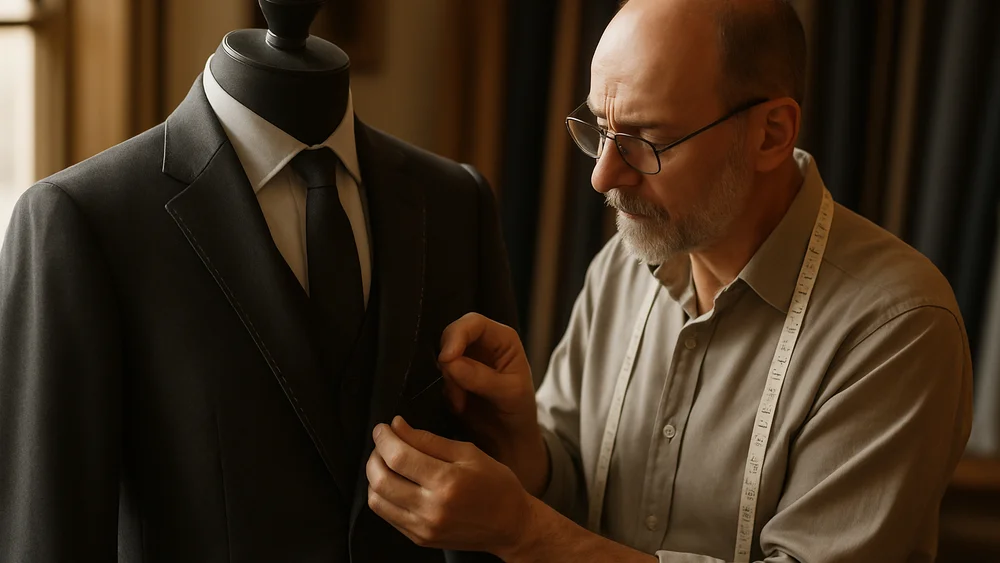
In suit tailoring, special importance is given to precise measurements, fabric quality, construction, design and the conditions of wear. Unlike a ready-made model, a custom order takes into account the peculiarities of the build, the desired style and the garment’s purpose.
The Leader tailoring facility carries out both individual and corporate orders. The service includes consultation, fabric selection, taking measurements, developing the model, a trial fitting and the final tailoring. The working process proceeds in predetermined stages, which facilitates agreeing on the details and the quality fulfillment of the order.
Suit tailoring for individual and corporate orders
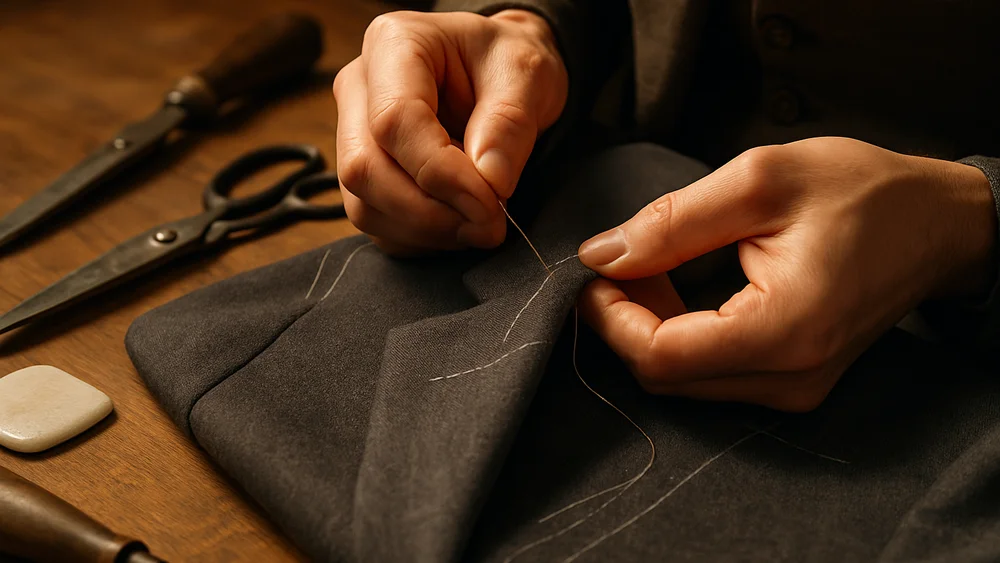
Preparing an individual suit starts with defining the garment’s purpose. Models intended for business meetings, official events, an everyday work environment or a special occasion need different construction, fabric and details.
When choosing the design, the suit’s silhouette, the jacket length, the collar shape, the number of buttons, the placement of pockets, the trouser cut and decorative elements are considered. Every detail must be coordinated with the overall look and the purpose of wear.
In the case of a corporate order, attention is paid not only to the garment’s design but also to the company’s field of activity, the working environment and the visual identity. For a team involved in public events, official meetings and direct communication with the customer, unified attire emphasizes an organized and professional environment.
The brand’s colors, logo, a specific type of buttons, distinctive seams, a lining or other visual details can be used in the design of a corporate suit. Moderate use of brand elements maintains an official look and at the same time expresses the company’s identity.
Taking measurements and preparing the construction
The suit’s quality is largely determined by precisely taken data. Along with the chest, waist and hip circumference, one must consider the shoulder width, the back length, the arm position, the body proportions and how the garment behaves during movement.
After taking the measurements, the appropriate construction is prepared. A correctly developed pattern reduces the likelihood of fabric stretching, excess wrinkles, an incorrect shoulder position and restricted movement.
At the trial fitting stage, the jacket length, collar placement, shoulder shape, sleeve length, the button-fastening spot and how the trousers sit are checked. If necessary, changes are made to the construction before the final tailoring.
Fabric selection
The choice of fabric depends on the season, the frequency of use, the working environment and the care conditions. A decision made by color and texture alone is often insufficient, because the fabric’s composition affects durability, breathability, the retention of shape and the way of care.
Wool-containing fabric is often used for official and business suits. The material looks natural, holds its shape well and is produced in different densities for different seasons.
Cotton fabric is relatively light and breathable. Such a material can be chosen for a less formal model or for a garment to be worn in a warm environment.
In a fabric of mixed composition, natural and synthetic fibers are distributed in a certain proportion. A properly chosen composition increases resistance to wear, reduces creasing and simplifies everyday care.
The fabric of a corporate suit intended for frequent use must keep its color and shape even after repeated cleaning. In the case of an active work regime, one must consider the material’s strength, breathability and seasonal conditions.
Individual trouser tailoring
For correct trouser tailoring, determining only the waist and length is not enough. The hip volume, the waist height, the knee position, the leg width and the natural drape of the fabric matter.
Individual construction is especially important in the case of non-standard proportions, a different height or a requirement for a specific cut. A proper fit reduces the risk of tightness in the waist area, excess stretching of the legs and discomfort during movement.
In a corporate order, the trousers’ overall design can remain in one style, while the sizes are prepared according to the employees’ data. Such an approach maintains the team’s unified look and takes into account different builds.
Workwear and work suits
When preparing a suit intended for a work environment, along with the design one must consider the specifics of the activity, the intensity of movement, temperature, the risk of contamination and safety requirements.
For office employees, preference is often given to classic and plain models. For staff involved in the service sector, a unified design, practical fabric and construction suitable for movement matter. And in a manufacturing or technical environment, the material’s durability, special pockets, fasteners and protective details require additional attention.
For a workspace with a risk of physical injury, workwear must be prepared taking into account the relevant safety requirements. The fabric’s strength, the finishing of the seams, visibility elements and protective details are determined according to the working conditions.
The main stages of planning a corporate order
Ordering corporate suits starts with discussing the requirements. At the first stage, the garment’s purpose, quantity, frequency of use, season and desired visual direction are defined.
At the next stage, the fabric is selected and the design concept is prepared. A test sample can be made based on the agreed model. When assessing the sample, the fabric, color, construction, details and overall look are checked.
After the design is approved, taking the employees’ measurements begins. In a large-quantity order, the systematization of measurements is especially important, so that the data is accurately distributed during the production process.
At the final stage, the finished product’s sizes, seams, fasteners, buttons, lining and other details are checked. After quality control, the order is handed over to the client in accordance with the previously agreed terms.
What should you pay attention to when choosing a suit?
When choosing a suit, first of all the purpose of use should be considered. Everyday work clothing must withstand frequent use and regular care. In a model intended for an official event, more attention can be given to the fabric’s texture, the silhouette and decorative details.
The season also significantly affects the choice of material. For a warm period, a light and breathable fabric is desirable. And for a cold season, a denser composition and an appropriate lining are used.
During movement, a suit should not stretch at the shoulders, back or waist area. The sleeve and trouser length is determined taking into account the shoes and shirt. The buttons should fasten freely, yet at the same time excess fabric should not accumulate.
In the case of frequent wear, the way of care should also be considered. Before purchasing the fabric, it is desirable to clarify the cleaning method, the degree of creasing, color fastness and the retention of shape.
Professional experience and quality control
A quality tailoring service includes not only cutting and sewing the fabric but also coordinating all stages of the order. Consultation, precise measurement, preparing the construction, a trial fitting and the final check are part of a single working process.
The Leader tailoring facility cooperates with suppliers of fabric and tailoring materials. When selecting materials, the composition, density, color fastness and suitability for the purpose are assessed.
During final quality control, the precision of the seams, the symmetry of the details, the finishing of the lining, the strength of the buttons and fasteners, as well as the fit of the finished suit are checked.
Contact us
Individual suit tailoring combines precise construction, quality fabric, thoughtful design and professional execution. In the case of a corporate order, taking into account the brand’s visual identity, the working conditions and the team’s overall style is added to the process.
Individual suits, corporate uniforms, trousers and workwear clothing tailoring serviceare available on Uniforms.ge. To agree on the order terms, the fabric, the design, the quantity and the deadlines, you can contact the Leader tailoring facility.