
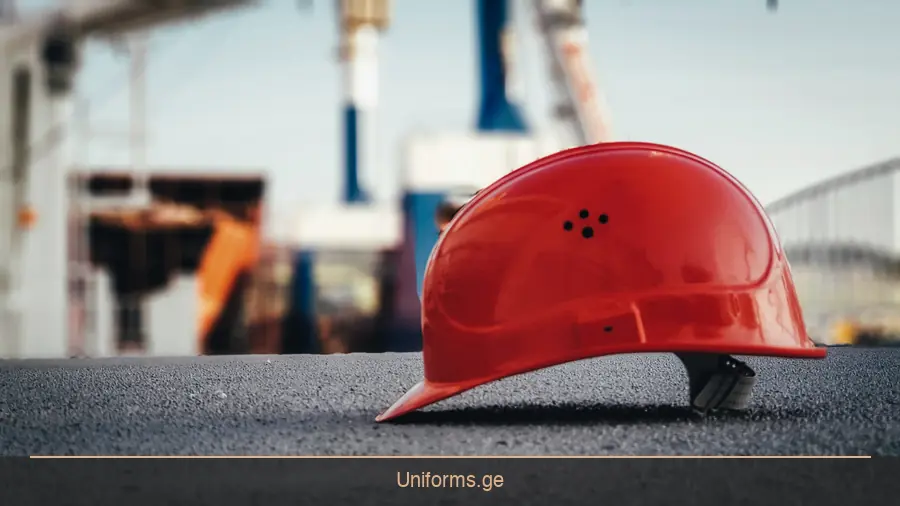
When purchasing workwear, Georgian employers often face one problem: which standard should the clothing meet and what do the numbers indicated on the label mean?
On the European market, protective clothing is subject to the system of EN and ISO standards. This system defines what level of protection a particular product offers, how it must be made and under what conditions it is used. In Georgia, from March 1, 2023, government decree №590 came into force, which established minimum requirements for the use of personal protective equipment in the workplace. Knowledge of the standards is no longer just a matter of theoretical interest, because it is already a practical necessity.
What are EN and ISO standards?
ISO (the International Organization for Standardization) is an internationally recognized system of standards, while EN (European Standard) is a quality criterion in effect on the European market. Both of them set the requirements for workwear : from the material’s properties to the marking rules.
The sign of compliance with these standards is the CE marking. When the CE sign is placed on the clothing, it means that the product meets the European Union’s regulations, specifically the EU 2016/425 regulation. This regulation has been in effect since 2018 and obliges the manufacturer to renew the EU type certificate every 5 years. Accordingly, clothing with the CE sign gives a certain quality guarantee.
All clothing certified by an EN/ISO standard comes with a user instruction. The instruction describes what dangers the product protects against, how the user should care for it, and so on. Following this information is important, because even clothing that complies with the standard loses its protective properties if it is washed or stored incorrectly.
EN ISO 13688 and workwear
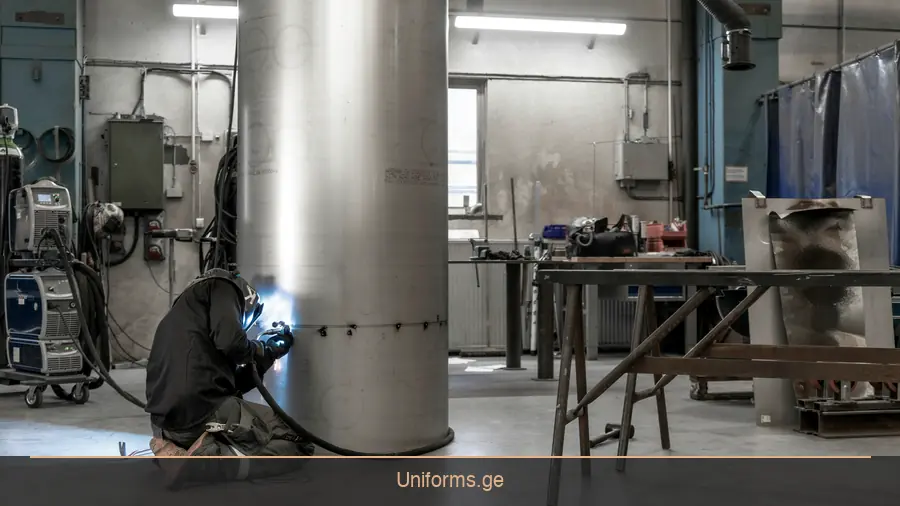
EN ISO 13688:2013 is the basic standard that all protective clothing must meet. It does not define specific protective properties (for example, protection from fire or chemicals) but sets out general requirements: ergonomics, the material’s harmlessness, marking, size designation and the format of the information provided by the manufacturer.
In practice this means that the clothing must be tailored in such a way that it does not restrict movement, the fabric does not irritate the skin and it keeps its shape even after 5 washes. The size and care instruction must be clearly readable on the label.
Single-use clothing must carry the appropriate designation. An important detail is also that indicating only this standard on the label is not allowed – it is always used together with a specific standard. For example, a high-visibility vest must meet the EN ISO 20471 standard along with EN ISO 13688. The Leader tailoring facility creates corporate uniforms for various industries, taking exactly these criteria into account.
The two most common specific standards
EN ISO 11612 implies protection from heat and fire. This standard concerns clothing that protects personnel from thermal effects and open flame. It covers resistance to flame spread, the effect of convective and radiant heat, as well as protection from splashes of molten metal.
The standard contains 6 indices (from A to F), each responding to a specific thermal hazard.
This standard is used most in the oil and gas, chemical, metallurgical and construction industries. A fabric that meets these requirements is either flame-resistant in itself (for example, aramid fiber) or acquires resistance to flame through special treatment. When choosing, the main thing is that the fabric keeps its protective properties even after repeated washing.
EN ISO 20471 is high-visibility clothing. This standard defines the requirements for clothing that makes personnel visible in low-light conditions. The standard is divided into three classes (from 1 to 3), where the third class implies the highest visibility. The class is determined by the minimum area of fluorescent material and reflective stripes.
In construction, road infrastructure and mining fields, this standard is mandatory. When choosing, take into account that the fluorescent color fades as a result of ultraviolet radiation and frequent washing, so the fabric’s durability should also be checked from this point of view. This standard is also in effect in Georgian legislation. Along with workwear for the medical and HoReCa sector , high-visibility clothing is part of the products that the Leader tailoring facility creates by custom order.
What does Georgian legislation require?
Government of Georgia decree №590 obliges the employer to provide employees with appropriate personal protective equipment on the basis of a risk assessment of the working environment. The regulation specifies: this equipment must be given to the employee free of charge, and the employer must take care of its maintenance, repair and timely replacement.
According to the regulation, personal protective equipment must correspond to the existing dangers and must comply with the conditions of the working environment and the requirements of ergonomics. In addition, the employer is obliged to give employees an instruction briefing and, if necessary, also conduct practical training.
These requirements are general and apply to all industries. However, in the construction sector, where more than 16,000 active companies operate and the risk of injury is a daily one, the frequency of inspections is also higher. The detection of a violation ends with administrative sanctions – a fine or the suspension of activity.
How to choose the right protective clothing
The multitude of standards causes confusion, especially in companies where no labor safety specialist works. That is exactly why several stages should be planned:
- Identifying the dangers – determine what type of risks your employees are subject to: thermal, chemical, mechanical or related to visibility.
- Checking compliance with the standard – the EN/ISO number indicated on the clothing’s label shows you what level of protection the product implies.
- The fabric’s resistance to washing – protective properties that disappear after a few washes have no practical value.
At the Leader tailoring facility you can order heat-resistant, high-visibility workwear.
For companies that have different requirements for different departments, a custom order and consultation is often the most justified way. From fabric selection to sample production, this process proceeds up to serial production, which reduces the probability of error.
Compliance with the standards is neither a formality nor an excessive obligation. It is connected with how safely your employees work. In this process, the Leader tailoring facility helps companies manage the full cycle – from consultation to delivery.