

In 1926, the French tennis player René Lacoste appeared at the US Open in clothing unusual for that time. In that period, players came onto the court in a long-sleeved shirt, long trousers and a tie. This attire restricted the athletes’ movement, because they found it hard to move conveniently when running up to the net. So Lacoste had an English tailor make him a short-sleeved cotton shirt. Soon other tennis players adopted this practical idea too.
Today, the polo shirt is part of the school uniform. A garment that appeared to escape restrictions eventually took the form of a mandatory uniform.
What do research and experience show?
In recent decades, demand for school uniforms has grown significantly. For example, in the United States the share of schools where wearing a uniform is mandatory has almost doubled.
International research shows that school uniforms chosen for students have a positive effect on the learning environment. In schools where students wear a uniform, lessons start in a more organized way, there is less noise in the classroom and it is easier for children to concentrate. Observations have also shown that after the introduction of a uniform, the attendance rate among older students improved, while the frequency of job changes among teachers decreased.
Social environment and equality
An identical uniform reduces social barriers at school. When children are dressed the same, clothing is no longer perceived as a measure of families’ material situation. This circumstance significantly reduces bullying based on appearance and clothing. As a result, it is easier for a student to interact with peers.
Uniform design and the child’s comfort
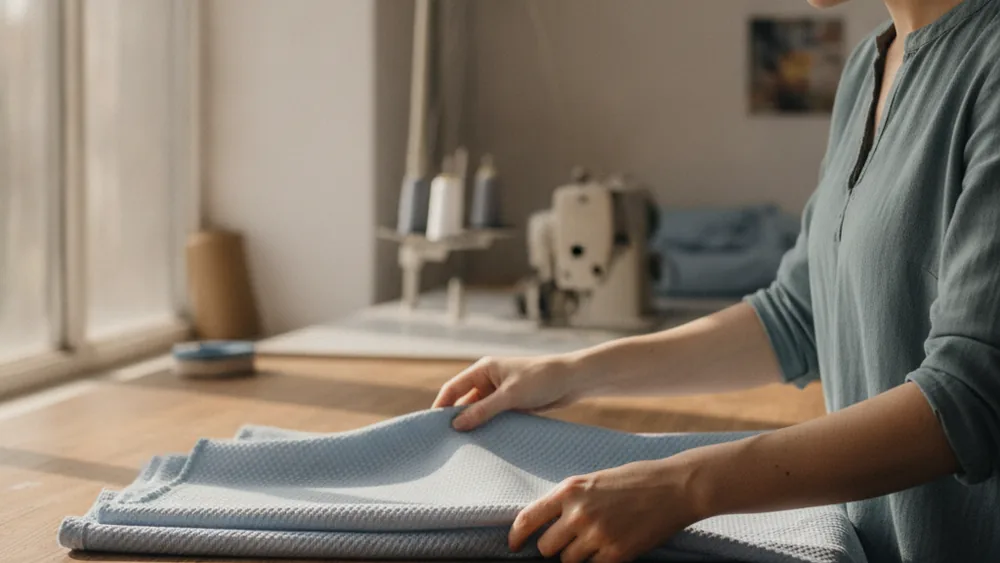
Along with improving the learning environment, the most important thing is still the child’s everyday comfort. If a uniform is uncomfortable and hinders the child in play or movement, it loses its purpose. A study by the University of Cambridge showed that uncomfortable uniforms reduce students’ daily physical activity, especially in primary grades.
That is why special attention is paid to the clothing’s fabric and pattern. A good school uniform is, first of all, tailored from quality cloth. Cotton fabric lets air through freely and is comfortable even in the heat.
This issue is especially relevant in Georgia too. From September, wearing a school uniform is mandatory in public schools up to and including grades I-VI.
A child’s clothing is washed often. If a shirt loses its color or changes shape after the very first wash, the problem is in the low quality of the fabric. Clothing made of cotton is much more practical in this respect, because it keeps its original look for a long time. If desired, the school emblem is added to the shirt - the logo application is done in such a way that the fabric’s breathability is not impaired.
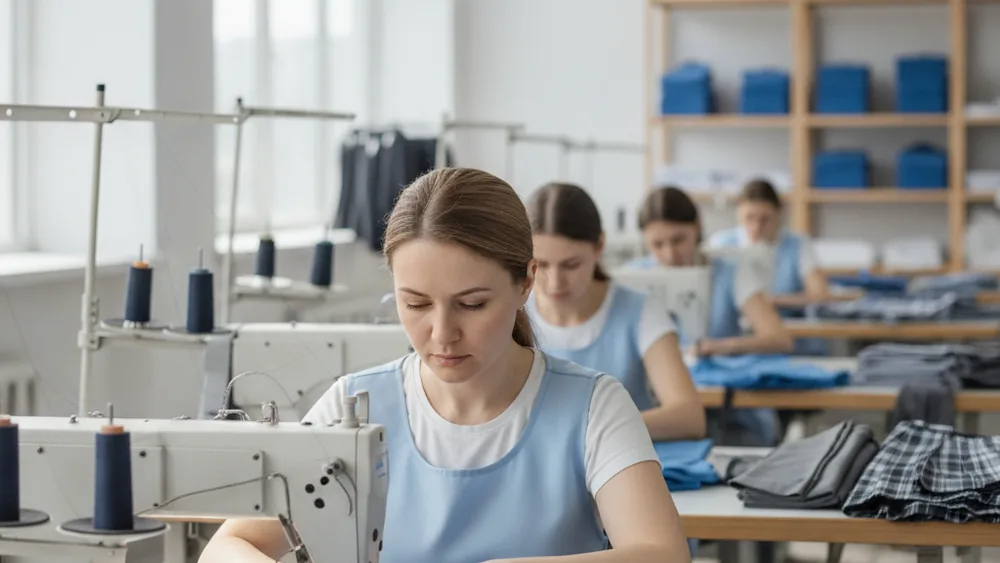
In this process, special importance is given to experience, a professional approach and constant quality control. The Leader tailoring facility has been serving schools for years and works taking into account individual requirements. At Leader, school, branded and special uniforms are created for representatives of various business sectors. At the Leader facility, every detail - from fabric selection to the final tailoring - is worked on taking into account quality, need and comfort. For the 2026-2027 academic year, given its relevance, the fabric for school uniforms at Leader was selected taking into account all the necessary criteria. A team of professionals, a diverse assortment and production tailored to various requirements allow Leader to offer schoolchildren the quality and durable uniforms they want - uniform tailoring takes place with a full cycle, in one space, while ready-made samples clearly show the quality of the work.
Ordering a school uniform and agreeing on the terms is possible directly - contact us and the team will help you choose the fabric, pattern and quantity.
Frequently asked questions (FAQ)
1. Why is cotton fabric considered the best choice?
Cotton fabric lets air through freely and helps the skin breathe. Unlike synthetic fabrics, it limits sweating in the heat, does not irritate the skin and, despite frequent washing, keeps its original shape and color for a long time.
2. How does the uniform’s design affect a student’s activity?
An uncomfortable pattern and rough fabric hinder a child in play and free movement. Research confirms that when wearing a comfortable uniform, children spend much more time on breaks in movement and physical activity.
3. What advantage do local production and the Leader facility have?
The main advantage of local production is quality control, flexibility and a quick response to the customer’s needs. The Leader tailoring facility combines many years of production experience and a wide assortment, which allows it to adapt each order to the requirements of a specific school. The Leader tailoring facility fully manages the production process, from the selection of quality fabric to the creation of the finished product. High-quality cotton is used in the school uniform models, which serves students’ free movement and care for their health.
4. Which grades does the school uniform reform concern?
Under the new regulation, wearing a school uniform becomes mandatory for students in grades I-VI of public schools.